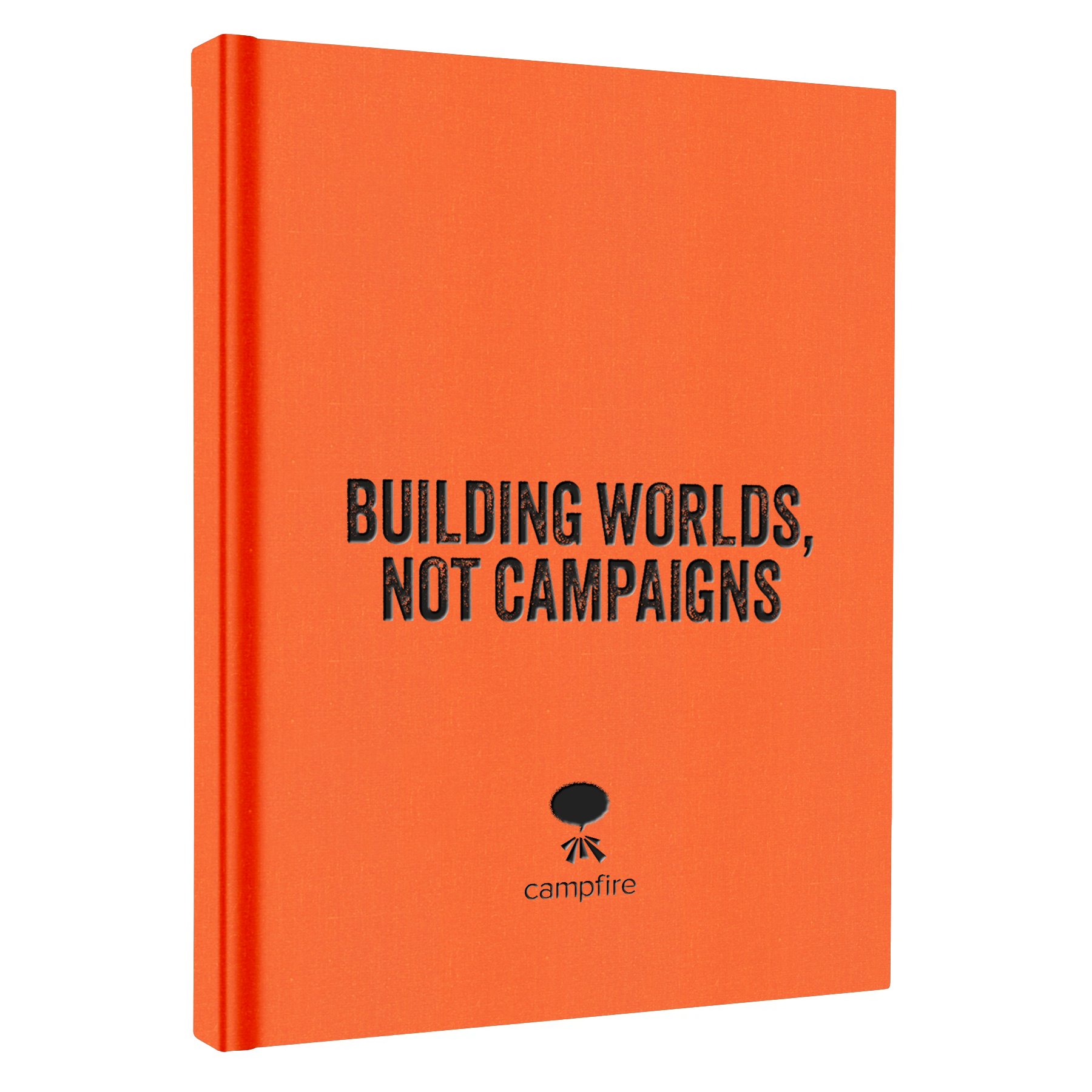
How to create immersive experiences that fans will never forget.
A field guide to the creative philosophy and pioneering work of
Campfire Entertainment — two decades of blurring the line between
story and reality.
Limited cloth-bound edition · 360 pages · Full color
About the Book
Stories Are Places People Go
Since 1999, Campfire has been creating experiences that invite audiences
to step inside stories — not just watch them. From The Blair Witch Project
to HBO's Westworld Experience, from hand-forged props to alternate reality
games, this book maps the philosophy behind two decades of pioneering
immersive work.
Part portfolio, part field guide, Build Worlds, Not Campaigns
explores the principles that drive deep fan engagement: why people share,
how discovery creates devotion, what magic looks like when you design for
participation rather than passive consumption.
Each chapter grounds a core principle in real projects and closes with
questions you can apply to your own work.
25+
Years of Work
30
Case Studies
10
Chapters
Inside the Book
Introduction
Why Immersive Experiences Matter
A journey through the process of immersive world-building.
Chapter 01
Lighting the Fire
The rise of a new kind of storytelling, from Blair Witch to the founding of Campfire.
Chapter 02
Tell Stories That Spread
The psychology of sharing and how to harness it to create genuine buzz.
Chapter 03
Create Worlds, Not Campaigns
What tiki bars can teach us about immersive world-building.
Chapter 04
Meet Fans Where They Are
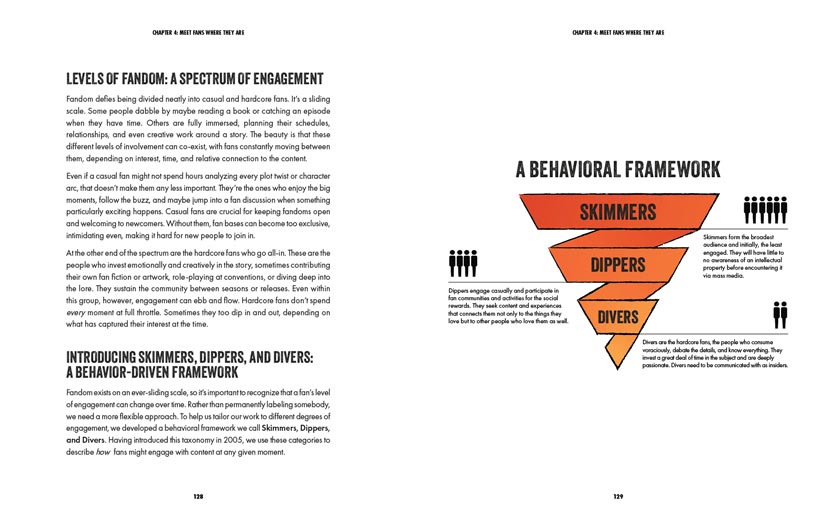
Skimmers, Dippers, and Divers — designing for every depth of engagement.
Chapter 05
Design for Discovery
From treasure hunts to escape rooms — turning fans into detectives.
Chapter 06
Don't Interrupt
Format subversion and hiding stories where no one thinks to look.
Chapter 07
Capture the Crowd
Lessons from the greatest show on Earth for live audience experiences.
Chapter 08
Think Like a Forger
The art of creating antique boxes, nostalgic scents, and pirate radio.
Chapter 09
Create Moments of Magic
How sleight-of-hand applies to immersive entertainment.
Chapter 10
Behind the Curtain
Harnessing cutting-edge tech without it getting in the way.
Conclusion
Living the Story
The stories we remember are the ones we're invited to live.
Read an Excerpt
Create Worlds, Not Campaigns
Chapter 03 · Tiki Bars and Speakeasies
Chapter 3: Create Worlds, Not Campaigns
Walt Disney's Dream of Disneyland
It's said that Walt Disney once had a simple yet transformative idea. While watching his daughters ride a carousel, he grew frustrated with the uninspired and chaotic state of amusement parks at the time. He envisioned a place where both children and adults could share magical experiences together, an environment where every detail told a story and transported visitors to another time and place.
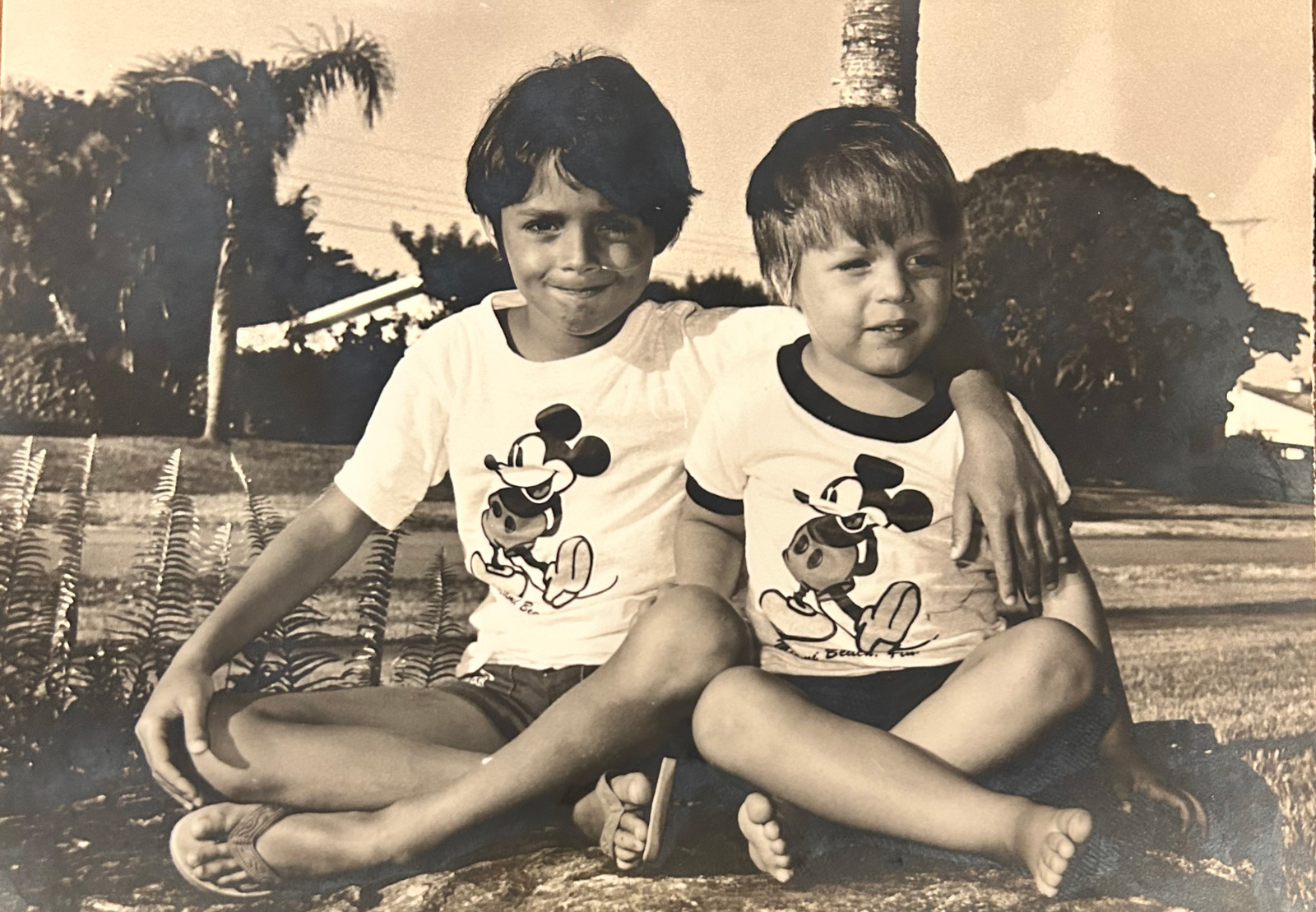
Campfire's Mike Monello and his brother—lifelong Disney fans.
That dream materialized as Disneyland, a place where the park itself became part of the story. Every interaction, no matter how small, is designed to keep the magic alive. In 1955 Disneyland set a new standard for immersive world-building, inspiring countless others to create experiences that go beyond mere entertainment.
When it comes to immersive design, Disney is rightly hailed as the ultimate imagineer. But we believe another visionary also deserves recognition for popularizing the art of creating immersive environments, someone whose real name you might not know, but whose impact has been felt worldwide. That man? Ernest Gantt, better known as Donn Beach, the creator of Don the Beachcomber, the first true tiki bar.
The Tiki Fantasy
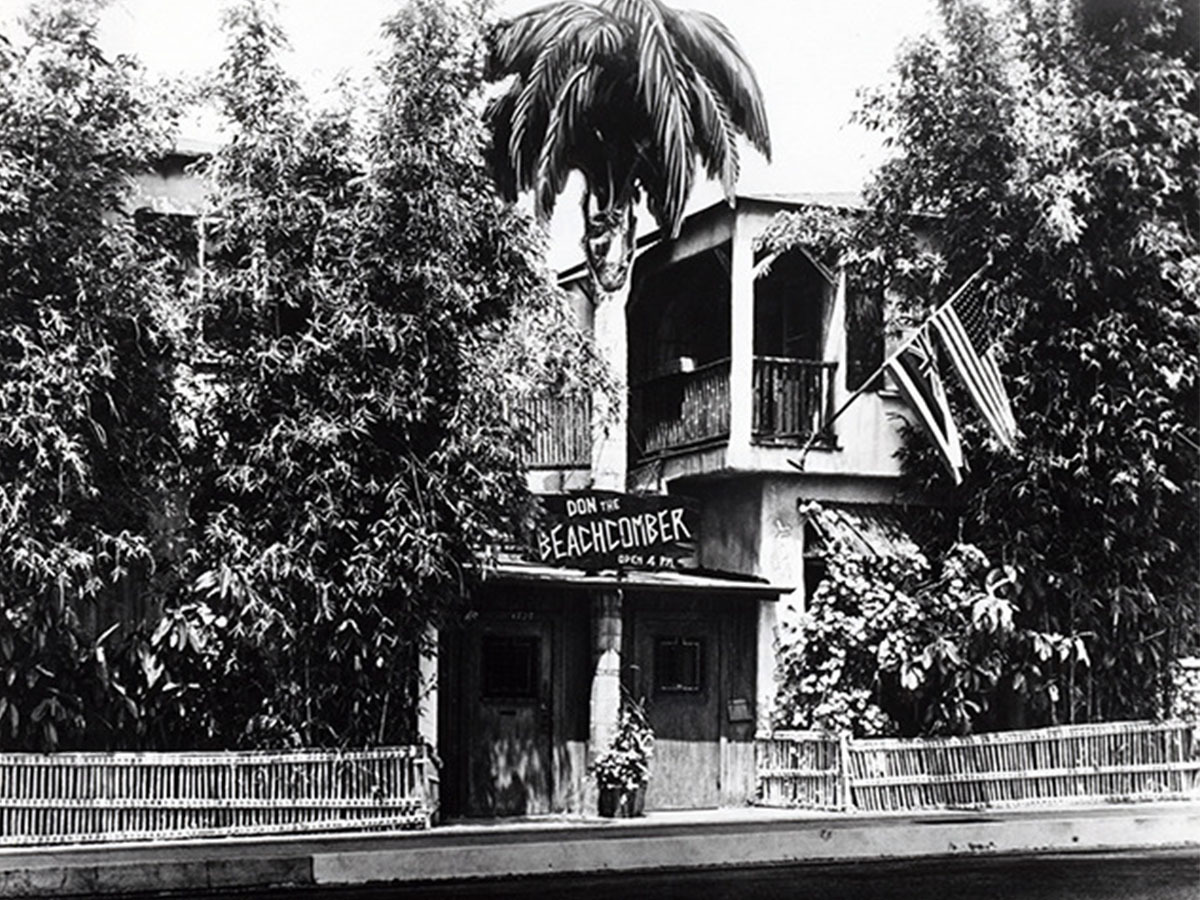
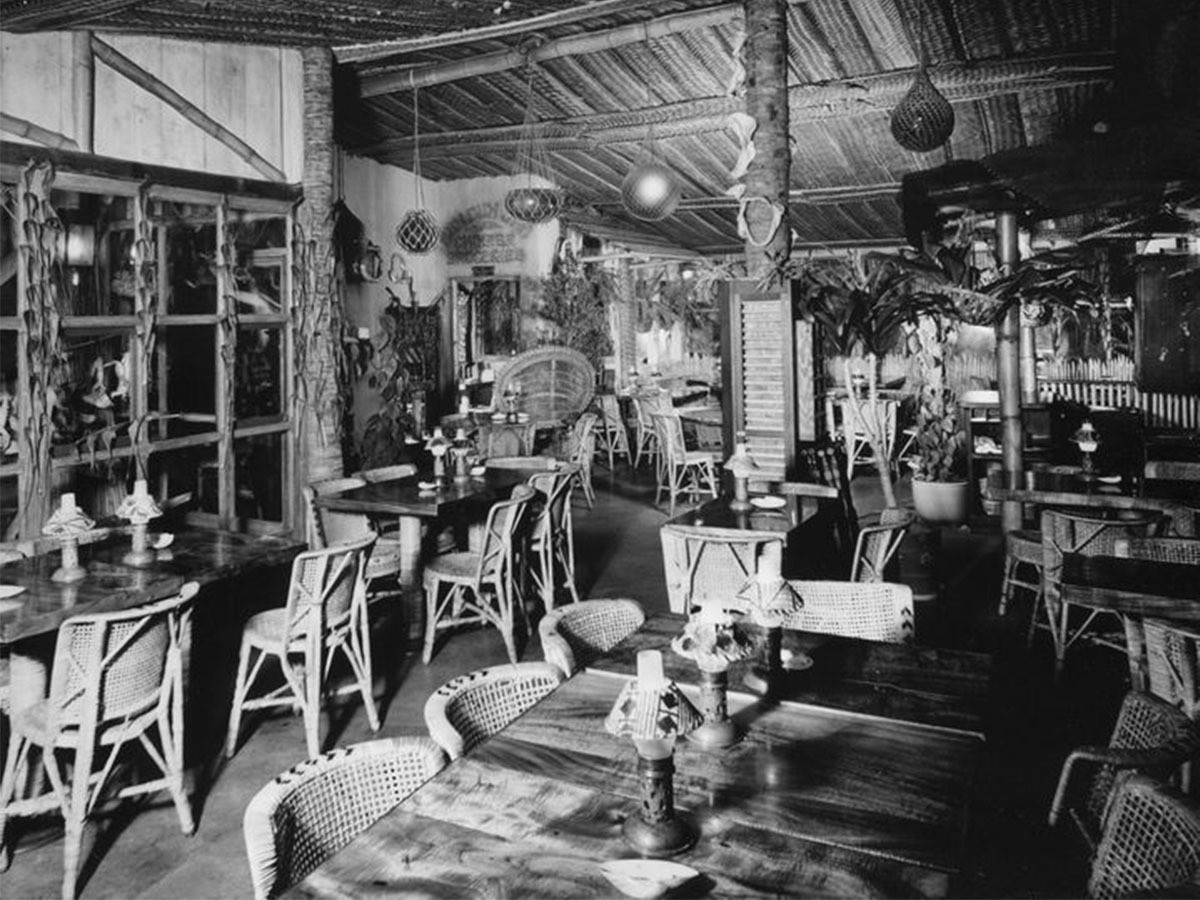
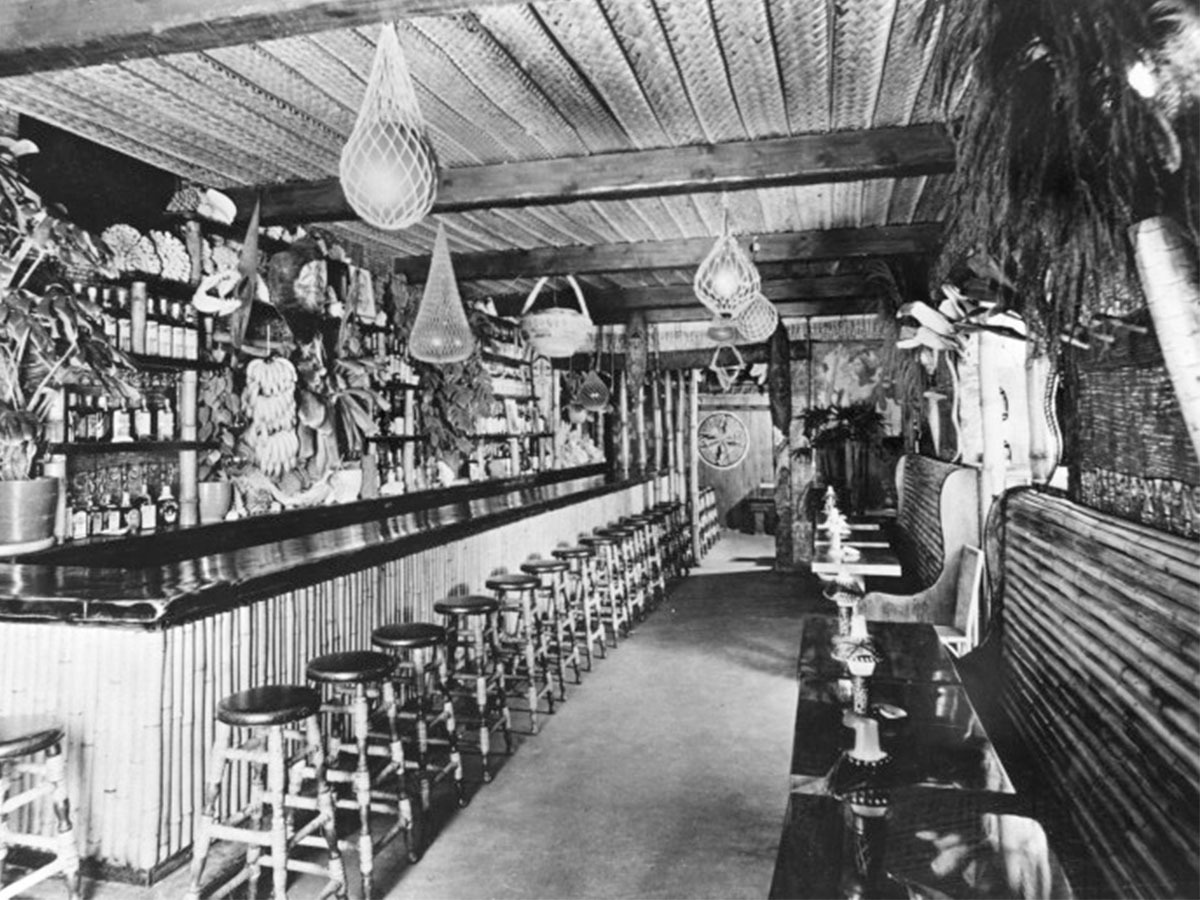
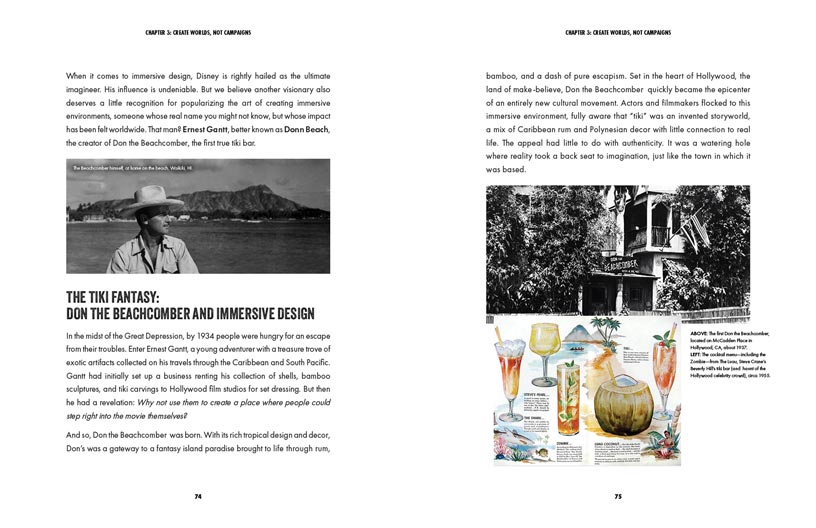
The first Don the Beachcomber, located on McCadden Place in Hollywood, CA, about 1937.
In the midst of the Great Depression, by 1934 people were hungry for an escape. Enter Ernest Gantt, a young adventurer with a treasure trove of exotic artifacts collected on his travels through the Caribbean and South Pacific. Gantt had initially set up a business renting his collection of shells, bamboo sculptures, and tiki carvings to Hollywood film studios for set dressing. But then he had a revelation: Why not use them to create a place where people could step right into the movie themselves?
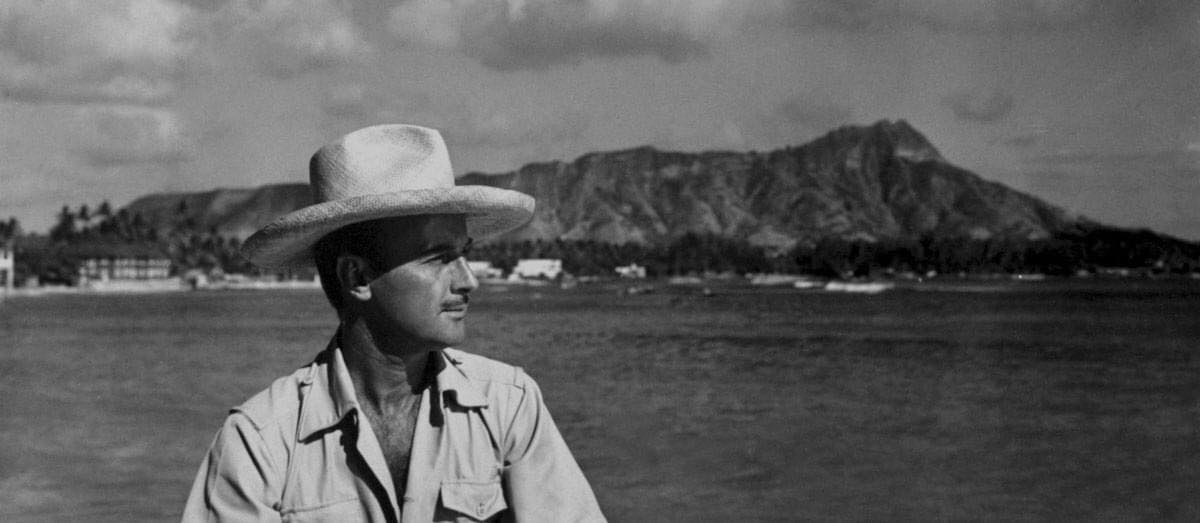
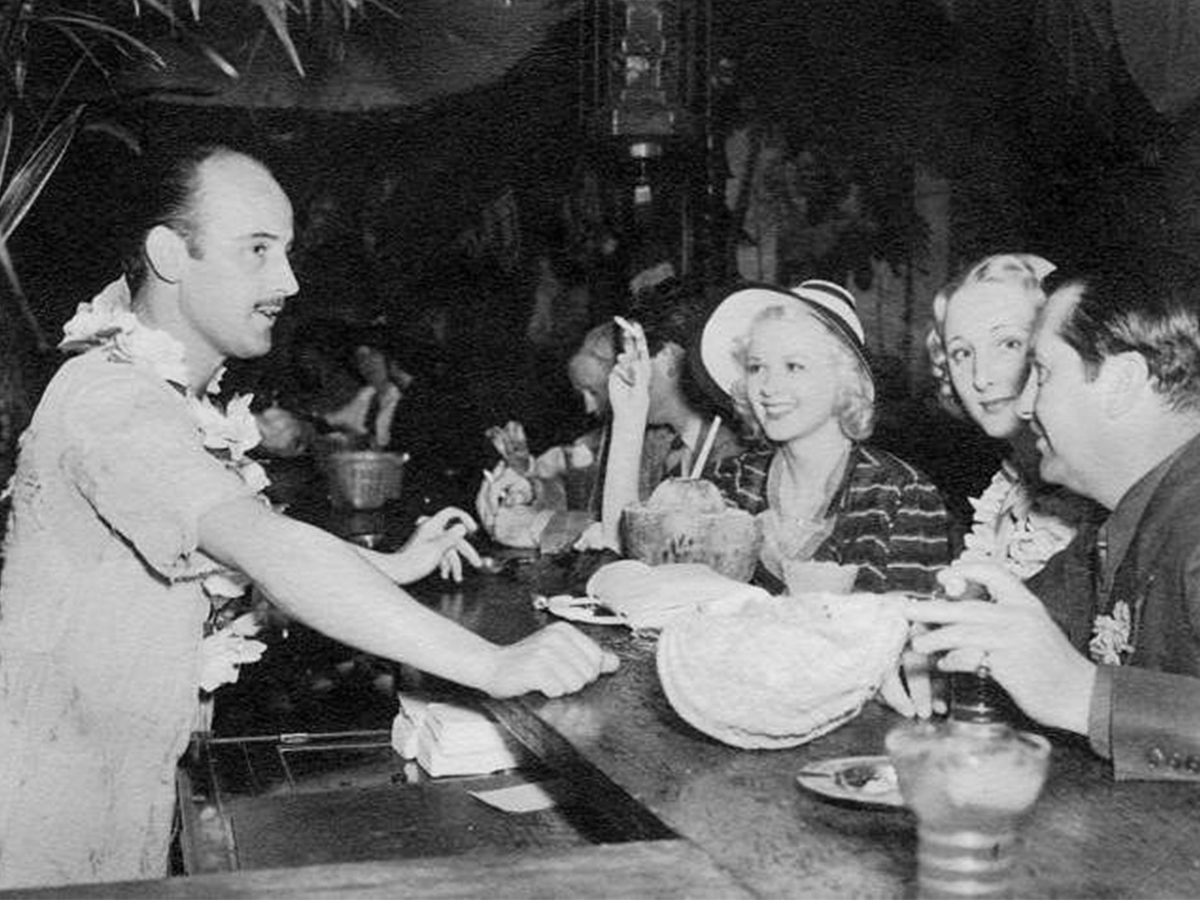
The Beachcomber himself, at home on the beach, Waikiki, HI.
And so, Don the Beachcomber was born. Set in the heart of Hollywood, the land of make-believe, Don the Beachcomber quickly became the epicenter of an entirely new cultural movement. Actors and filmmakers flocked to this immersive environment, fully aware that "tiki" was an invented storyworld, a mix of Caribbean rum and Polynesian decor with little connection to real life. The appeal had little to do with authenticity. It was a watering hole where reality took a back seat to imagination, just like the town in which it was based.
The cocktail menu—including The Zombie—from Steve Crane's Beverly Hills tiki bar (and haunt of the Hollywood celebrity crowd) The Luau, circa 1955.
Set Pieces for Escapism
From the start, Gantt's approach was rooted in world-building. With his drinks, he sold the fantasy of a tropical adventure. The bar was furnished with tiki statues, bamboo furniture, and tropical plants, all arranged to evoke a mythical island getaway. Soft Hawaiian music played in the background and the sweet aroma of tropical fruits and spices filled the air. The cocktails themselves — like the legendary Zombie — were tall tales in a glass, each with its own colorful backstory.
This multi-sensory approach is something designers of immersive experiences still strive for today. Gantt understood that to truly transport people, you have to engage all their senses. His tiki bars didn't just look like another world — they felt, smelt, and tasted like one.
Where Fantasy and Reality Collide
After World War II, returning soldiers — especially those who had served in the Pacific theater — found themselves longing for places that could recapture the tropical lifestyle they had experienced during their deployments. Tiki bars offered them a way to relive those moments of escape.
By blending reality and fantasy, tiki bars became powerful immersive experiences, where patrons could imagine themselves as explorers, castaways, or adventurers. This is the essence of immersive design: not just storytelling but storygiving. That is, offering people a participatory role to play in a fantasy world.
The Rise of Real-Life Experiences in a Digital World
Both Walt Disney and Donn Beach understood the incredible power of immersion. Both anticipated something that's even more evident today, especially in a world dominated by digital experiences. As more of our work, social interactions, and entertainment shift online, the value of real-world, in-person experiences has never been greater.
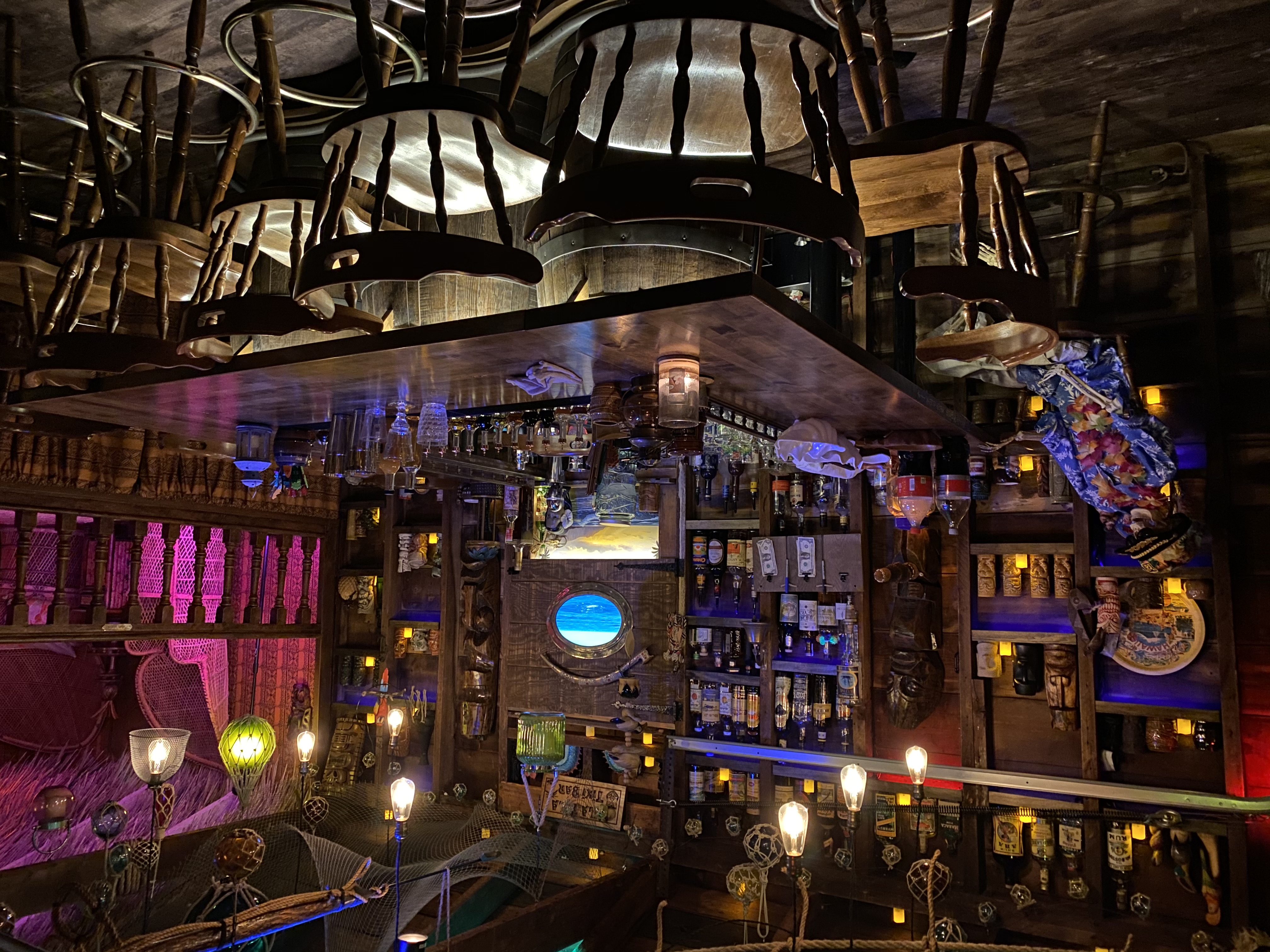
The Bula Bula - a private tiki bar built by Campfire's Steve Coulson in his garage in New Jersey.
Today's fans want to engage with stories both digitally and physically. We may be more connected online than ever but there's something special about stepping into a real-world environment. Physically walking through a world, touching the objects, hearing the sounds, even smelling the atmosphere — it deepens our emotional connection to the story. Real-world experiences give people something they can't get from a screen: the chance to live the story, not just watch it.
This excerpt continues with case studies, frameworks, and practical principles across ten chapters…
360 pages of immersive design thinking, photography, and case studies.
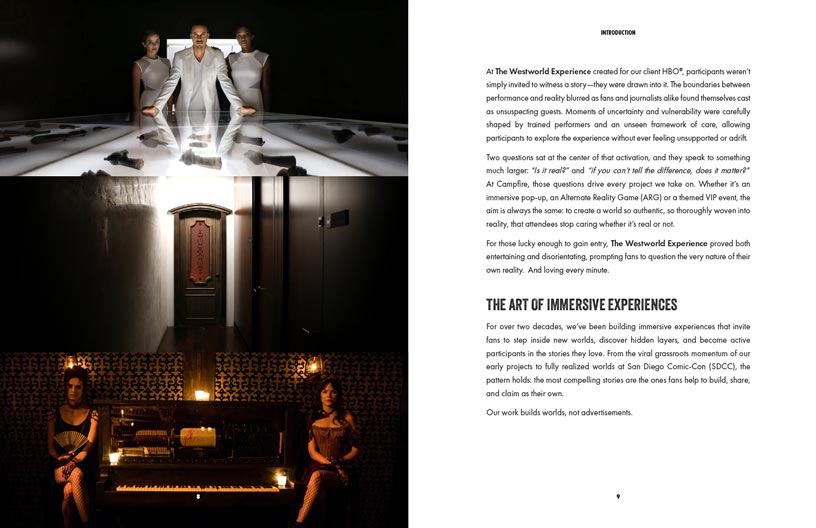
Introduction · The Westworld Experience
Chapter 3 · Tiki Bars and Speakeasies
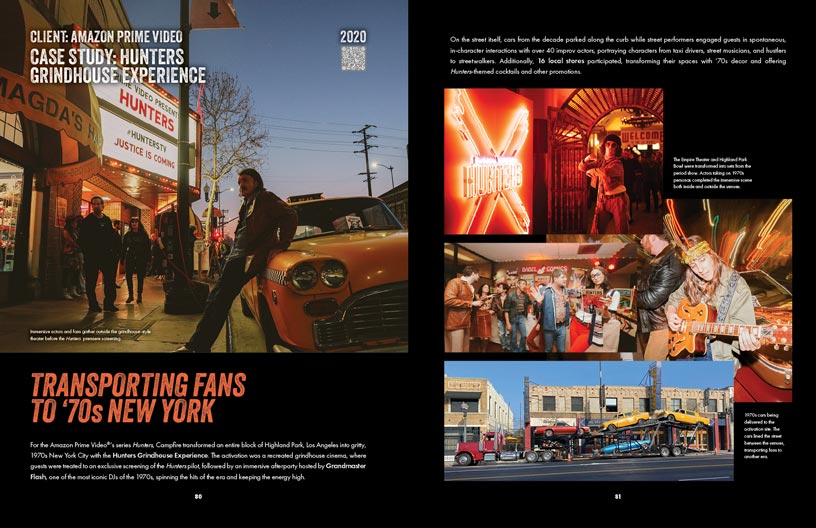
Case Study · Hunters Grindhouse Experience
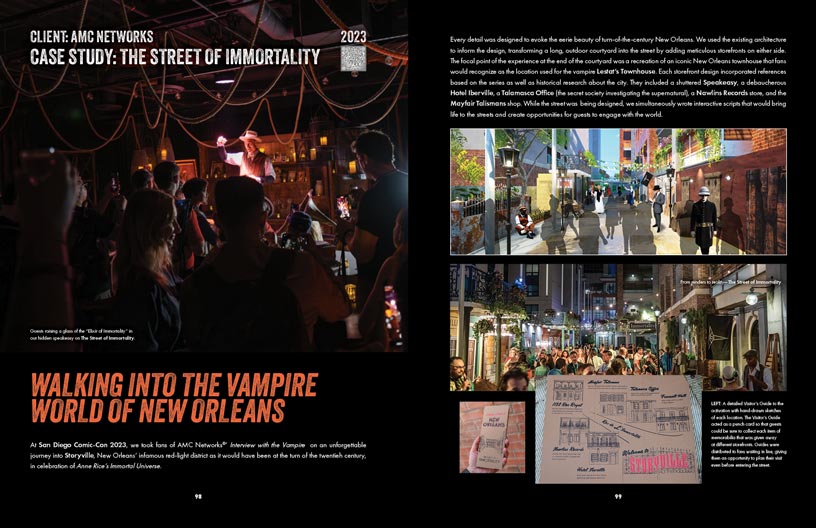
Case Study · The Street of Immortality
Chapter 4 · Skimmers, Dippers, and Divers
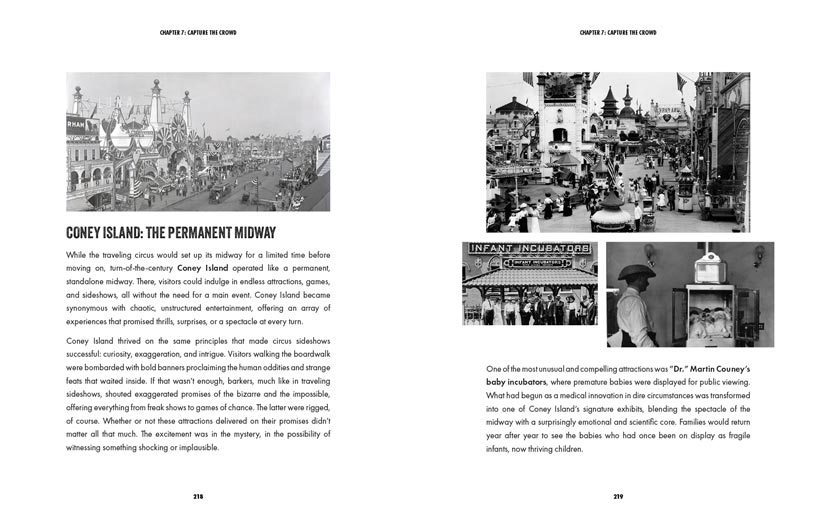
Chapter 7 · Coney Island: The Permanent Midway
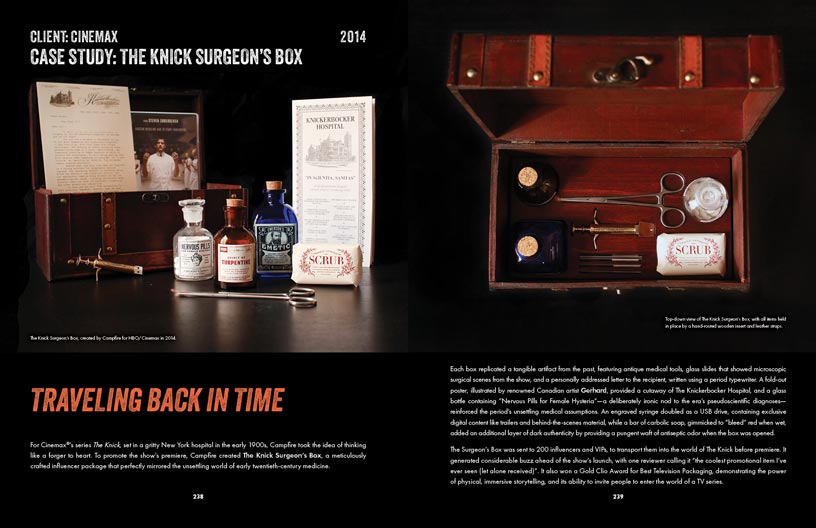
Case Study · The Knick Surgeon's Box
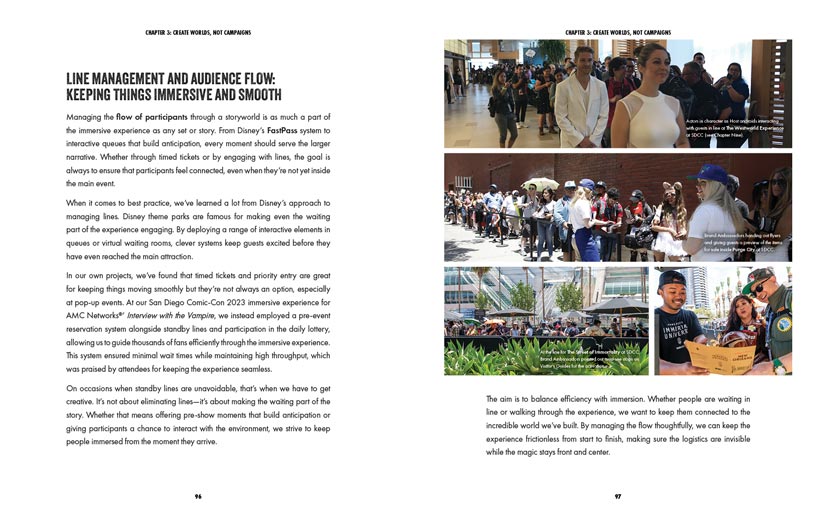
Chapter 3 · Line Management and Audience Flow
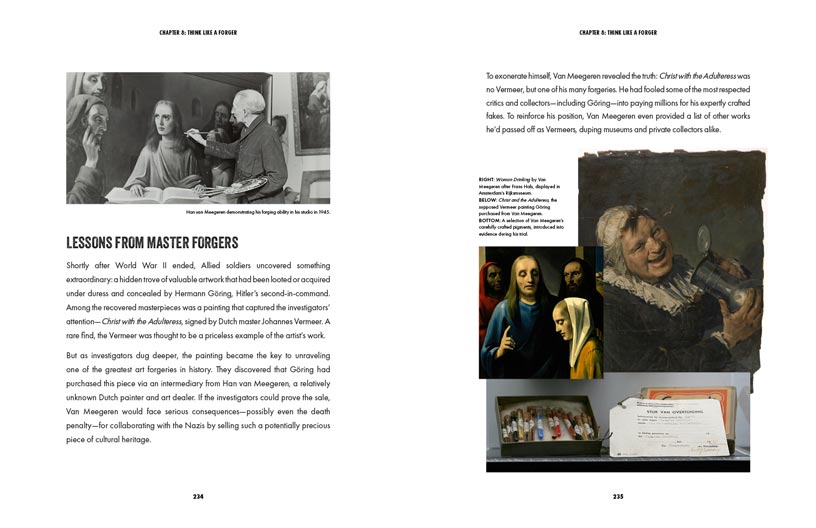
Chapter 8 · Lessons from Master Forgers
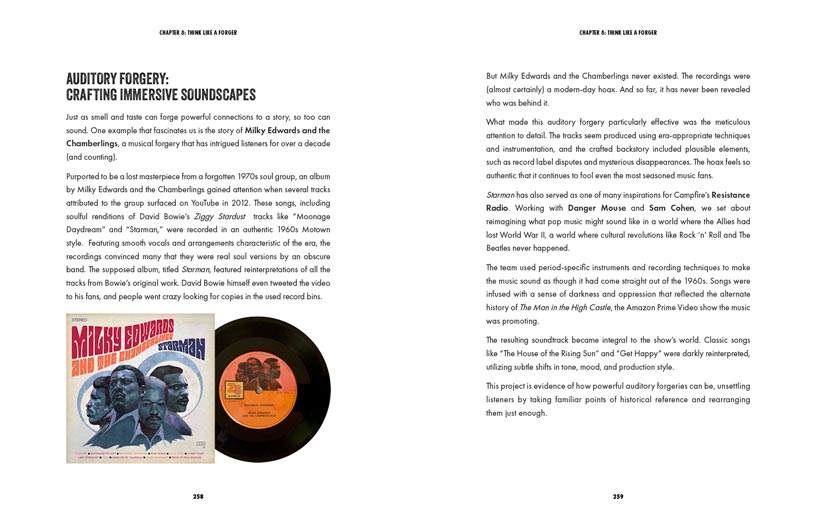
Chapter 8 · Auditory Forgery
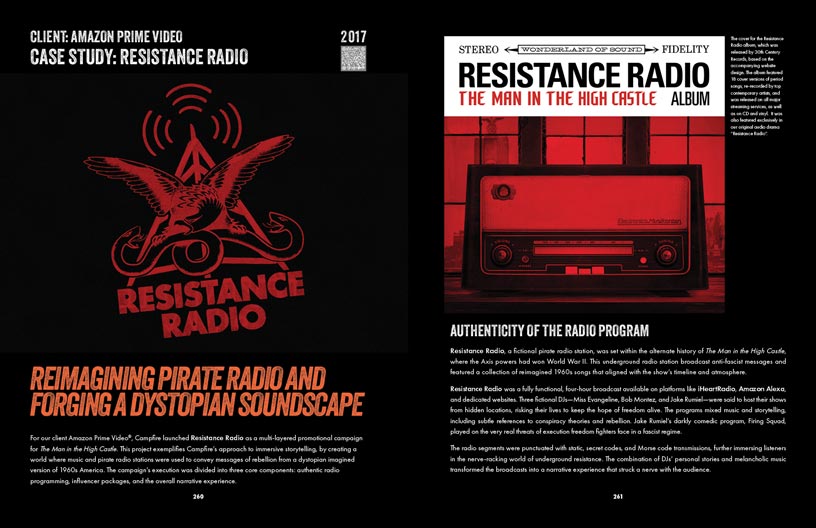
Case Study · Resistance Radio
Praise for the Book
“The campaign Campfire undertook for our series Hunted was not just ingenious — it was genius. Campfire perfectly captured the spirit of the show and then turned it into an online magic trick that baffled everyone who experienced it and left them talking about it for days. In fact, it’s been well over a decade since the campaign, and I’m still thinking about it. What a trip.”
Frank Spotnitz
Award-winning American Writer, Producer and Chief Executive of Big Light Productions Ltd
"From basically inventing the concept of 'viral marketing' to creating unforgettable live experiences for fans, Campfire has spent the last 25 years constantly rethinking what it takes to get people to pay attention. In this book, they are sharing not only the stories of how some of their most famous work came to be but also the secret sauce that lead to groundbreaking work. It is a rollicking good read for anyone remotely interested in advertising past, present and future."
Lars Bastholm
Ex-CCO, Google
Placeholder for advance reader testimonial. Legacy-tier
endorsements (Punchdrunk, Meow Wolf, Henry Jenkins) go here.
First Last
Title, Company
Limited Distribution
Request the Digital Edition
The physical edition of Build Worlds, Not Campaigns is a
limited cloth-bound hardcover, hand-distributed to select recipients.
The complete digital edition is available on request to practitioners,
creators, and anyone with a genuine interest in immersive storytelling.
Requests are reviewed by our team. We'll follow up with access to the
digital edition and, where appropriate, an invitation to continue
the conversation.